Crossref members register around 37,000 records daily. All this metadata is openly shared with the global scholarly community through our free APIs. We receive over two billion calls to our API each month, signalling its use by hundreds of tools and services worldwide, supporting the discovery and assessment of scholarly metadata. As part of a new series in our blog, we will spotlight the diversity of tools and integrations that rely on Crossref metadata to serve the scholarly community. In this initial post, we chat to Luca Foppiano, the developer and maintainer of Grobid1, to learn about how Grobid uses Crossref metadata to improve the extraction and enrichment of bibliographic information from scholarly PDFs.
On behalf of the Nominating Committee, I’m pleased to share the slate of candidates for the 2026 board election. Every active member organisation is invited to submit a ballot to elect the incoming board class.
We’re providing a summary of the board’s July 2026 meeting. The July board meeting is our only in-person meeting. The board gathers for two days of strategic thinking and long-range planning, as well as conducting annual board business. This year, we focused on allocating surplus funds we have on hand to invest in a three-year project to redesign the content system. In a related discussion, we decided to lower content registration fees starting in 2027 because we’ve had a demonstrated history of generating surpluses, exceeding what we need to run Crossref. We also discussed the board structure, as part of our regular review of stakeholder governance. And we conducted annual board business, such as approving the audited financial statements and reviewed our risk register and mitigation plans.
The resolutions are available on the dedicated section of our website, which also lists the members of the Board and offers further information about our governance.
We also managed to squeeze in watching a World Cup game over dinner.
Starting today, funder names deposited in Crossref metadata without an identifier will be matched to ROR IDs, to support an open and connected Research Nexus. Funding information is an increasingly important part of the scholarly record. The improved matching strategy supports researchers, funders, institutions, and meta-researchers, who rely on that information to understand how research is supported and what outcomes that support produces.
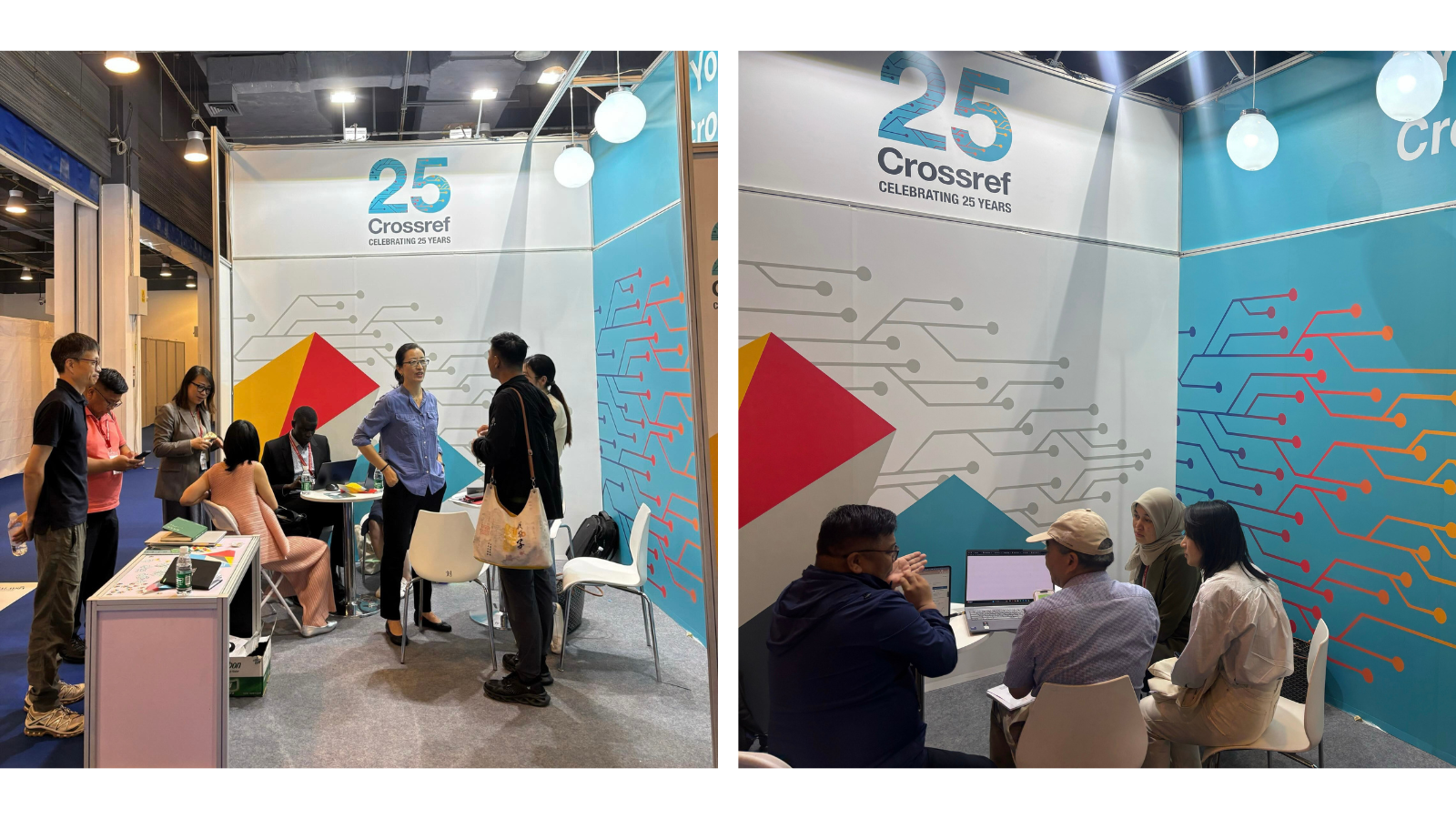
This June, we presented at the Beijing International Book Fair (BIBF) and connected directly with our growing community in China. With a surge of interest from Chinese publishers and partners, it was clear: there’s a strong and rising curiosity around how metadata plays a vital role in maintaining the integrity of the scholarly record.
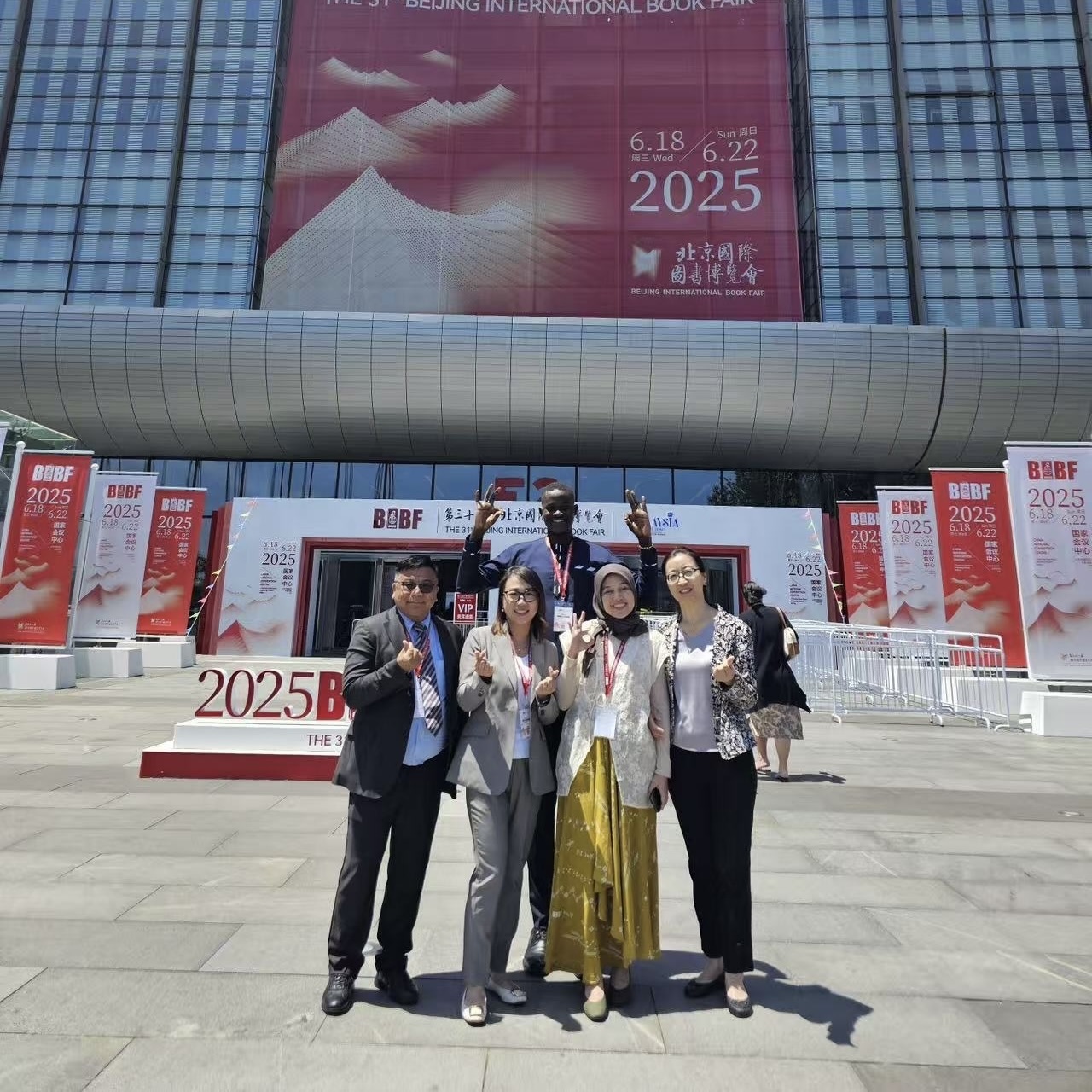
And we were not alone: our incredible Crossref Ambassadors based in the region joined us at the booth, and together we hosted visitors and answered questions. Throughout the fair, we engaged in passionate conversations, provided metadata guidance, and shared our knowledge as part of a panel session focused on how metadata supports scholarship. Ms. Ran Dang, Editorial Director at Atlantis Press (Springer Nature), supports Crossref outreach and advocates for Open Access and Open Science. Ms. Xiaofeng Guo, Director at Sin-Chn Scientific Press, leads DOI infrastructure efforts in China and supports Crossref members across the region. Mr. Gantulga Lkhagva, Founder and CEO of Mongolian Digital Knowledge Solutions and MongoliaJOL, works to strengthen local scholarly publishing and promote metadata best practices.
Photo: Crossref Ambassadors and Staff
This was the first time some of us had met in person after years of online collaboration, and the sense of connection and shared purpose was energising. Our Ambassadors also contributed to this post, sharing their favourite moments, key takeaways, and stories from the fair.
A snapshot from the panel discussion
During BIBF, we hosted a panel session focused on the role of metadata in supporting scholarship. Ms. Alicia Wang, Vice President - CNPIEC Kexin Technology Co., Ltd, Robbykha Rosalien, Membership Support Specialist - Crossref, Johanssen Obanda - Community Engagement Manager - Crossref, and our Ambassadors joined the panel, and we were glad to have a mix of Crossref members, Metadata Plus users, and curious participants join the discussion.
Photo: Panel session - Ms. Alicia Wang, Mr. Gantulga Lkhagva, Ms. Robbykha Rosalien, Mr. Johanssen Obanda, Ms. Xiaofeng Guo, Ms. Ran Dang.
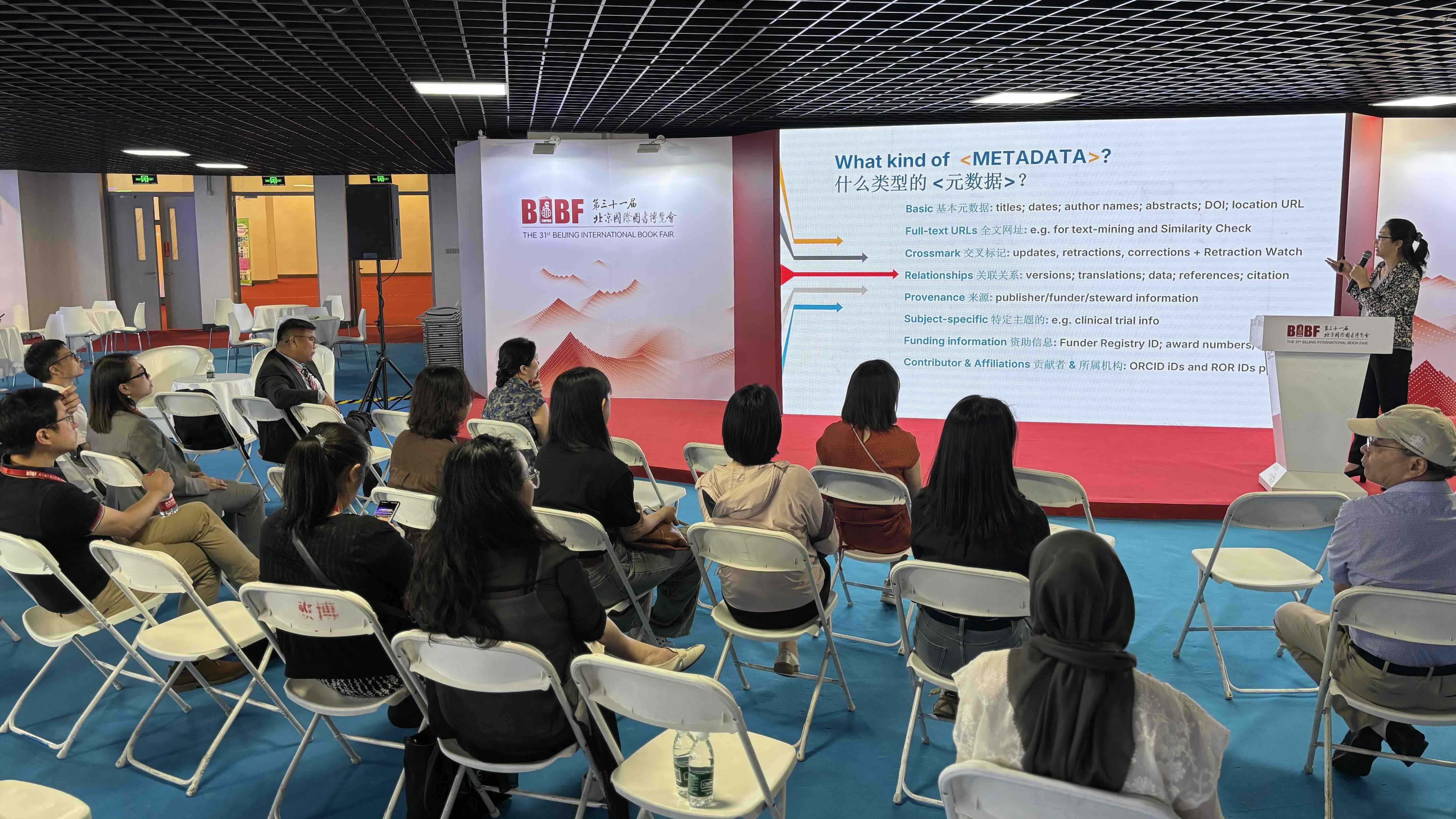
Ms Xiaofeng Guo making a presentation about how metadata supports scholarship
Key questions from the session included the status of open abstracts in Crossref, how retracted articles affect citation tracking and research integrity, and what happens when DOIs no longer resolve due to unmaintained landing pages.
Robbykha explained our DOI resolution and archival systems, clarifying that DOIs are designed to always resolve, even when the original content moves or becomes unavailable. We also touched on the work Crossref is doing to support transparency around retractions, and the goals of The Initiative for Open Abstracts, which aims to make research summaries more accessible.
Metadata Plus use cases from China
Two of our Metadata Plus users were present during the panel and generously shared how they are leveraging Crossref metadata in their work.
Jie He from ScienceRiver described how their team translates Crossref metadata from English into Chinese, making it possible for users in China to search for relevant academic literature originally published outside the mainland. Their efforts open up global research to local audiences, bridging language and accessibility gaps. This conversation also led to broader discussions about multilingual metadata and the work our Metadata Advisory Group hopes to support in this area.
Eurasia Academic Publishing Group, based in Hong Kong, talked about using Crossref metadata coupled with AI approaches to develop a tool for readers, editors, and institutions to help assess the integrity of research articles and detect paper mills.
Reflections from our Ambassadors and the community
One common thread throughout our time at BIBF was the recognition that many of our resources, documentation, and support materials are still primarily in English. For Chinese-speaking community members who are new to Crossref or metadata concepts, this creates a pretty steep learning curve. We heard this clearly, and we know there’s work to do in making our services more accessible across languages.
From personal highlights to fascinating conversations, here’s what some of our Ambassadors had to say:
I am very happy to have met with colleagues from Crossref and several Ambassadors from Asia! We have met many times online, but this was the first time we met face-to-face and worked together to engage with our members and host events! I learned a great deal from our face-to-face exchanges, including updates on Crossref’s latest use cases, industry development trends, and even information about my colleagues’ hometowns. We built friendships and successfully participated in the first BIBF event for Crossref, which was the biggest takeaway!
At the BIBF exhibition and events, we had good conversations with our Chinese partners and some members, and learned about actual application needs and use cases, which was very helpful to me. Most of the people I met spoke Chinese, but their publishers or institutions may have come from countries and regions outside mainland China, such as Singapore, Hong Kong, and Taiwan.
I also participated in the BIBF Forum events held before the exhibition, including the PubTech Conference, the first STM Asia-Pacific Conference, and the networking dinner. These three events were jointly organised by China National Publications Import and Export (Group) Corporation (CNPIEC), STM, and the Chinese Society of China University Journals (SCUJ). During the events, I heard about the latest developments in the publishing industry and gained valuable insights into hot topics. I also met many new and old friends and partners, some from China and others from around the world. Interacting with them not only allowed me to reminisce about the past but also provided me with new perspectives and expanded my professional network.
Discussion with Ms. Bo Li from China Education Publication Import & Export Corporation (CEPIEC) on matching papers with their funding grants from China. This is an excellent use case for Crossref’s Grant Linking System (GLS) service and related metadata. We introduced the GLS service and Crossref metadata to Ms. Bo Li and will follow up with her and her colleagues to help them use Crossref’s metadata to complete this task more easily.
Discussion with Dr. Zhu Xuefeng. Their team has developed an application that identifies research integrity issues in journals and articles. They primarily utilise Crossref metadata (including article metadata and retraction observation data), withdrarXiv, ORCID and Research Organization Registry (ROR) data, among others. By linking and integrating these data, they calculate the research integrity risk of relevant journals and articles, providing a reference for authors submitting manuscripts, editors reviewing manuscripts, and institutions monitoring research integrity issues.
At the Crossref BIBF event, Ms. Wang Xuan, Vice President of CNPIEC Kexin Technology Co., Ltd, a Crossref sponsor in China, discussed the strong demand for reliable data sources when applying AI in the field of scientific research, as well as how Crossref metadata can provide strong support. She proposed that all AI products focusing on scientific research should show the original DOIs for the academic resources they cite in the results they provide to users, to enhance the reliability and traceability of data sources. She committed that her company, Ke Xin, as a provider of research AI assistants, will implement this functionality in its products and hopes to promote this as a best practice to all research AI application developers and providers. This reflects that, as cutting-edge technology advances and requirements for research integrity and compliance continue to rise, Crossref metadata continues to play an important role in scholarship and will become increasingly extensive and indispensable.