Each organization in the global community of Crossref members (that’s currently over 24k organizations in 166 different countries) plays a key role in building the Research Nexus. Any opportunity we have to meet with our members in person is a highlight and a way for us to learn more from each other. The month of January saw three of us travel to Bangkok to attend the first-ever Charleston Conference organised in Asia and to meet with our growing community in Thailand.
This year, we placed a spotlight on the Latin American community, hosting the second Crossref Metadata Sprint in São Paulo, Brazil from 4 - 6 March 2026. In our first tri-lingual event, we brought together 31 participants from Argentina, Brazil, Colombia, Ecuador, and Mexico. Our goal was to foster community co-creation using the open scholarly metadata. The Sprint was an opportunity to pose questions, share ideas, collaborate on research, and propose innovative solutions that enhance the use of metadata in scholarly communication and beyond.
Read on for more details about the content of the Sprint, and the resulting projects. You can also register to join our Sprint Showcase call on 22nd April to hear directly from the team about their creations.
On 17 March 2026, we experienced an outage that affected DOI resolution for Crossref DOIs and the deposit of metadata records by Crossref members. In this summary, we outline what happened, the impact on our community, and the steps we are taking to strengthen our systems and processes as a result.
We’re excited to announce a new data citation API endpoint and are seeking your feedback. The new service makes existing data citation relationships in our metadata available, thereby surfacing this part of the research nexus. At the same time, we’ve decided that it’s time to move on from Event Data.
We believe in Persistent Identifiers. We believe in defence in depth. Today we’re excited to announce an upgrade to our data resilience strategy.
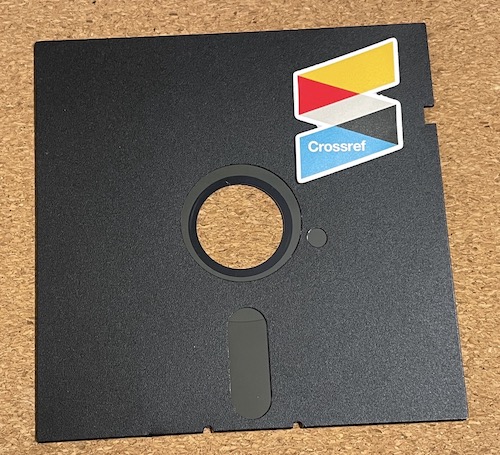
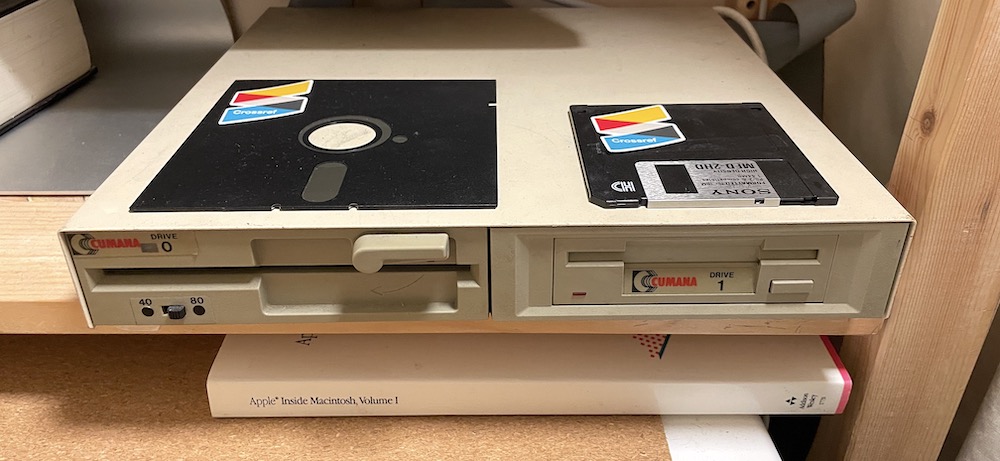
Defence in depth means layers of security and resilience, and that means layers of backups. For some years now, our last line of defence has been a reliable, tried-and-tested technology. One that’s been around for a while. Yes, I’m talking about the humble 5¼ inch floppy disk.
This may come as surprise to some. When things go well, you’re probably never aware of them. In day to day use, the only time a typical Crossref user sees a floppy disk is when they click ‘save’ (yes, some journals still require submissions in Microsoft Word).
History
But why?
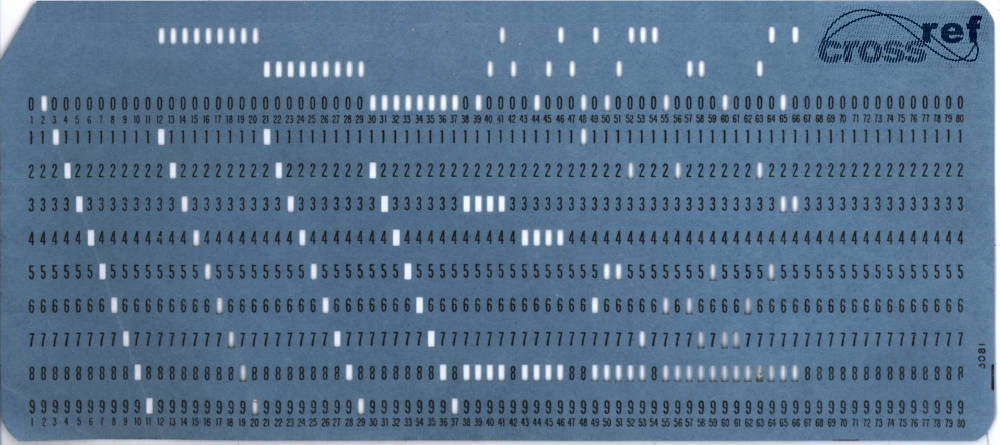
Let me take you back to the early days of Crossref. The technology scene was different. This data was too important to trust to new and unproven technologies like Zip disks, CD-Rs or USB Thumb Drives. So we started with punched cards.
IBM 5081-style punched card.
Punched cards are reliable and durable as long as you don’t fold, spindle or mutilate them. But even in 2001 we knew that punched cards’ days were numbered. The capacity of 80 characters kept DOIs short. Translating DOIs into EBCDIC made ASCII a challenge, let alone SICIs. We kept a close eye on the nascent Unicode.
Breathing Room
In 2017 the change of DOI display guidelines from http://dx.doi.org to https://doi.org shortened each DOI by 2 characters, buying us some time. But eventually we knew we had to upgrade to something more modern.
So we migrated to 5¼ inch floppy disks.
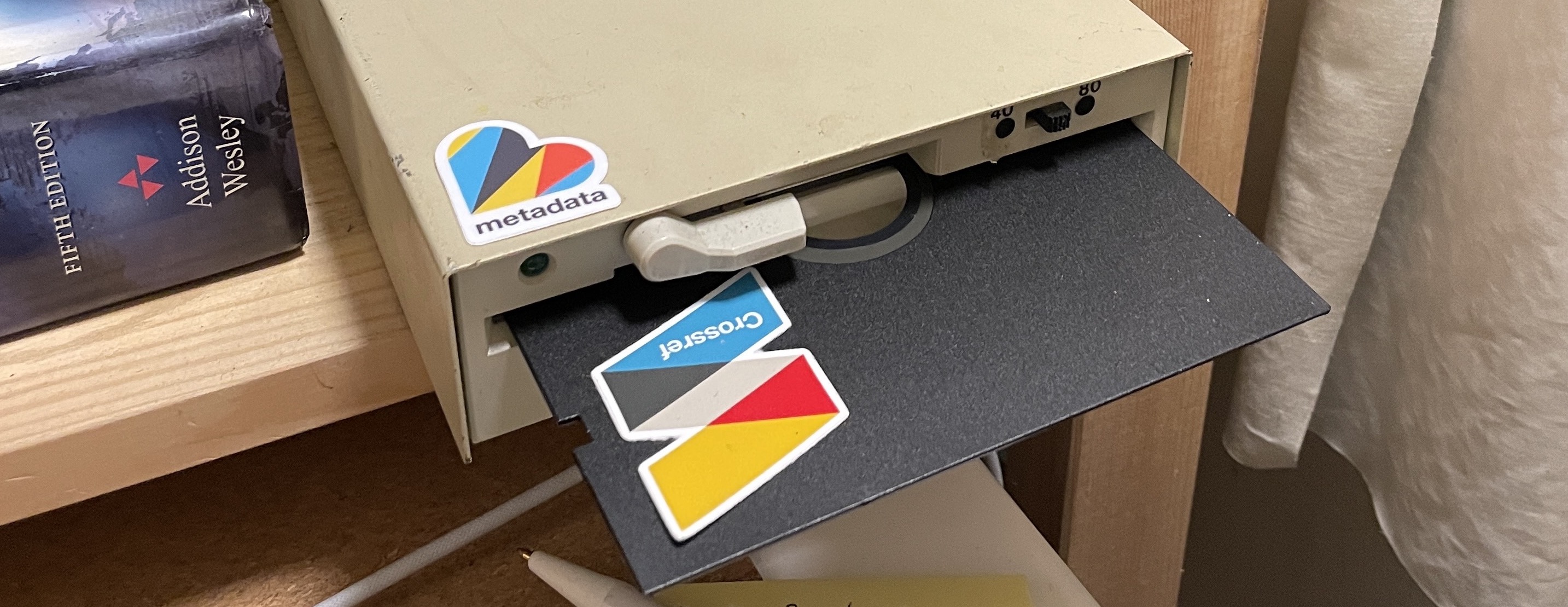
5¼ Floppy disk in drive
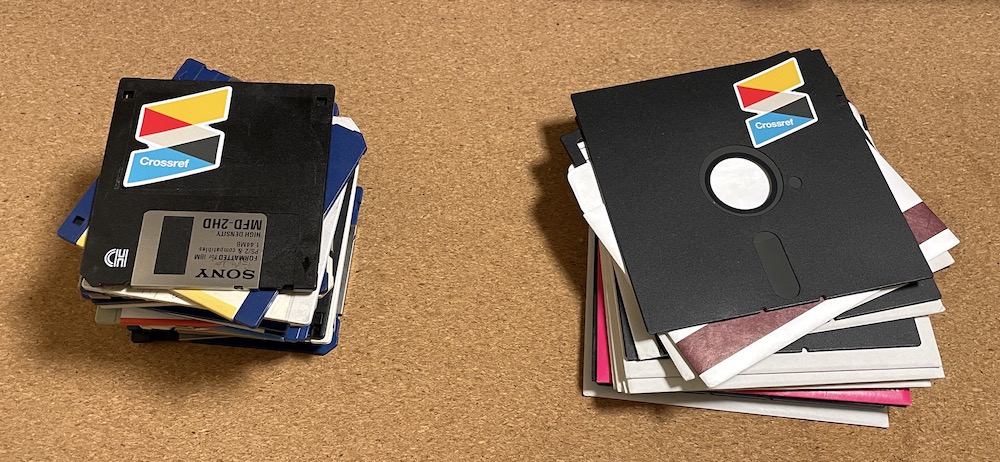
At 640 KB per disk these were a huge improvement. We could fit around 20,000 DOIs on one floppy. Today we only need around 10,000 floppy disks to store all of our DOIs (not the metadata, just the DOIs). Surprisingly this only takes about 20 metres of shelf space to store.
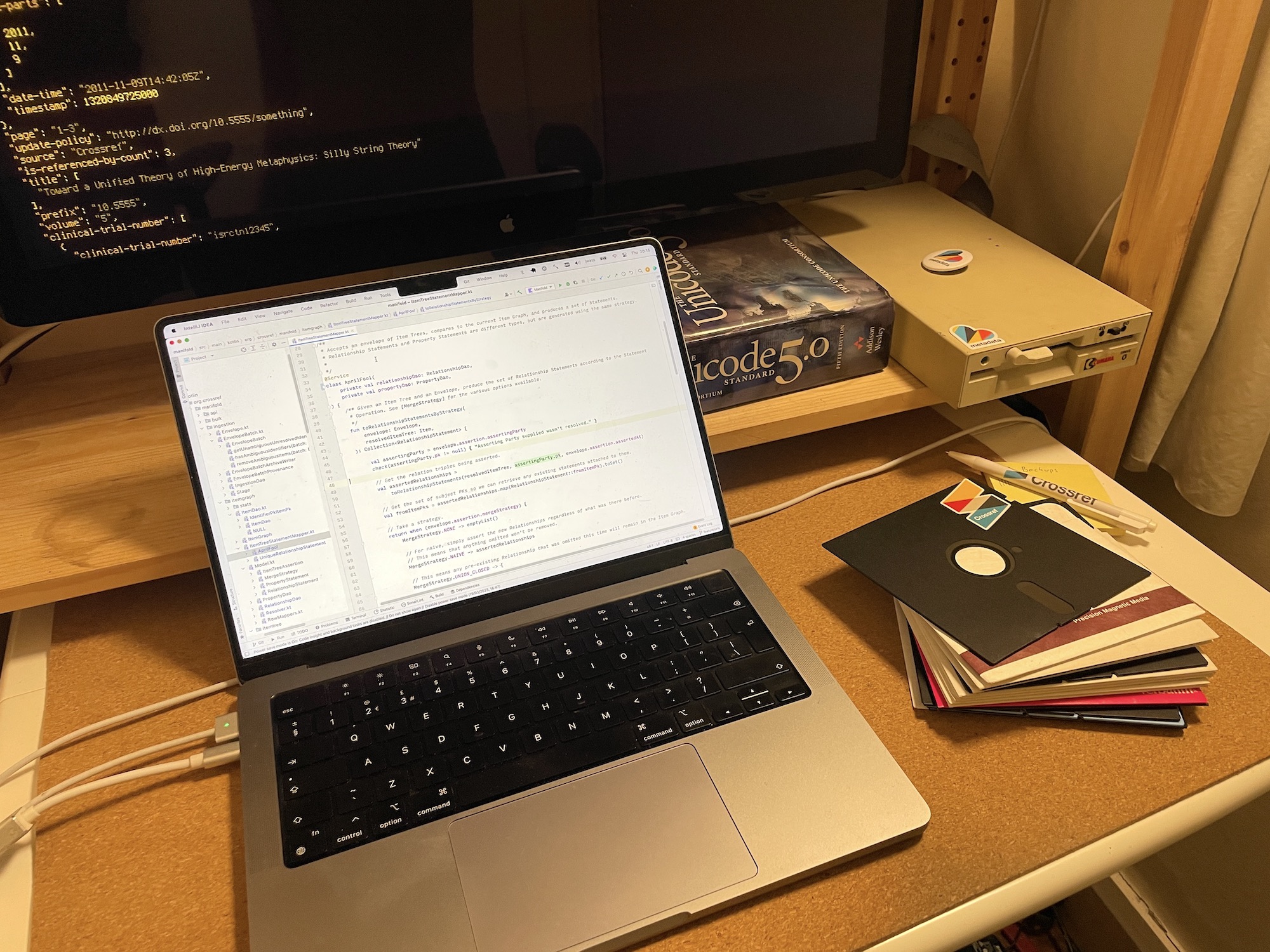
Typical work from home setup. Getting ready to backup some DOIs!
The move to working-from-home brought an unexpected benefit. Staff mail floppy disks to each other and keep them in constant rotation, which produces a distributed fault tolerant system.
Persistence Means Change
But it can’t last forever. DOIs registration shows no sign of slowing down. It’s clear we need a new, compact storage medium. So, after months of research, we’ve invested in new equipment.
Today we announce our migration to 3½ inch floppies.
If it goes to plan you won’t even notice the change.