Each organization in the global community of Crossref members (that’s currently over 24k organizations in 166 different countries) plays a key role in building the Research Nexus. Any opportunity we have to meet with our members in person is a highlight and a way for us to learn more from each other. The month of January saw three of us travel to Bangkok to attend the first-ever Charleston Conference organised in Asia and to meet with our growing community in Thailand.
This year, we placed a spotlight on the Latin American community, hosting the second Crossref Metadata Sprint in São Paulo, Brazil from 4 - 6 March 2026. In our first tri-lingual event, we brought together 31 participants from Argentina, Brazil, Colombia, Ecuador, and Mexico. Our goal was to foster community co-creation using the open scholarly metadata. The Sprint was an opportunity to pose questions, share ideas, collaborate on research, and propose innovative solutions that enhance the use of metadata in scholarly communication and beyond.
Read on for more details about the content of the Sprint, and the resulting projects. You can also register to join our Sprint Showcase call on 22nd April to hear directly from the team about their creations.
On 17 March 2026, we experienced an outage that affected DOI resolution for Crossref DOIs and the deposit of metadata records by Crossref members. In this summary, we outline what happened, the impact on our community, and the steps we are taking to strengthen our systems and processes as a result.
We’re excited to announce a new data citation API endpoint and are seeking your feedback. The new service makes existing data citation relationships in our metadata available, thereby surfacing this part of the research nexus. At the same time, we’ve decided that it’s time to move on from Event Data.
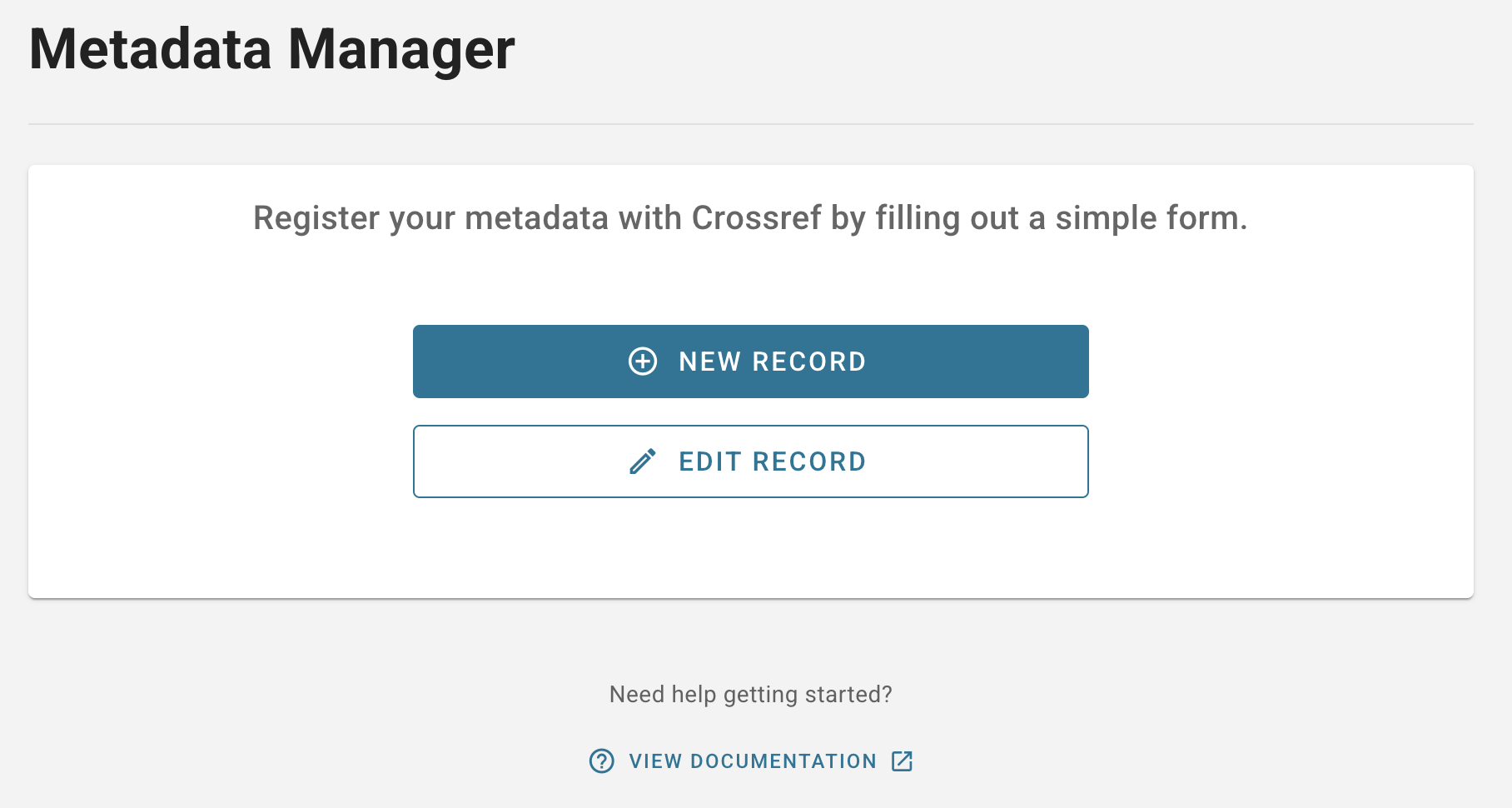
The new Metadata Manager tool (previously known as the record registration form) can be used to deposit metadata for your records. You do not need any knowledge of XML to use it. The tool currently supports journal articles and grants, but we are planning to add support for additional record types in future.
Select the type of record you wish to create, then enter the metadata associated with your record in the corresponding fields. Some fields are required to be filled out in order to submit your record, while others are optional. If you are registering a journal article, you can find links to our documentation in the form for more information on what each field means.
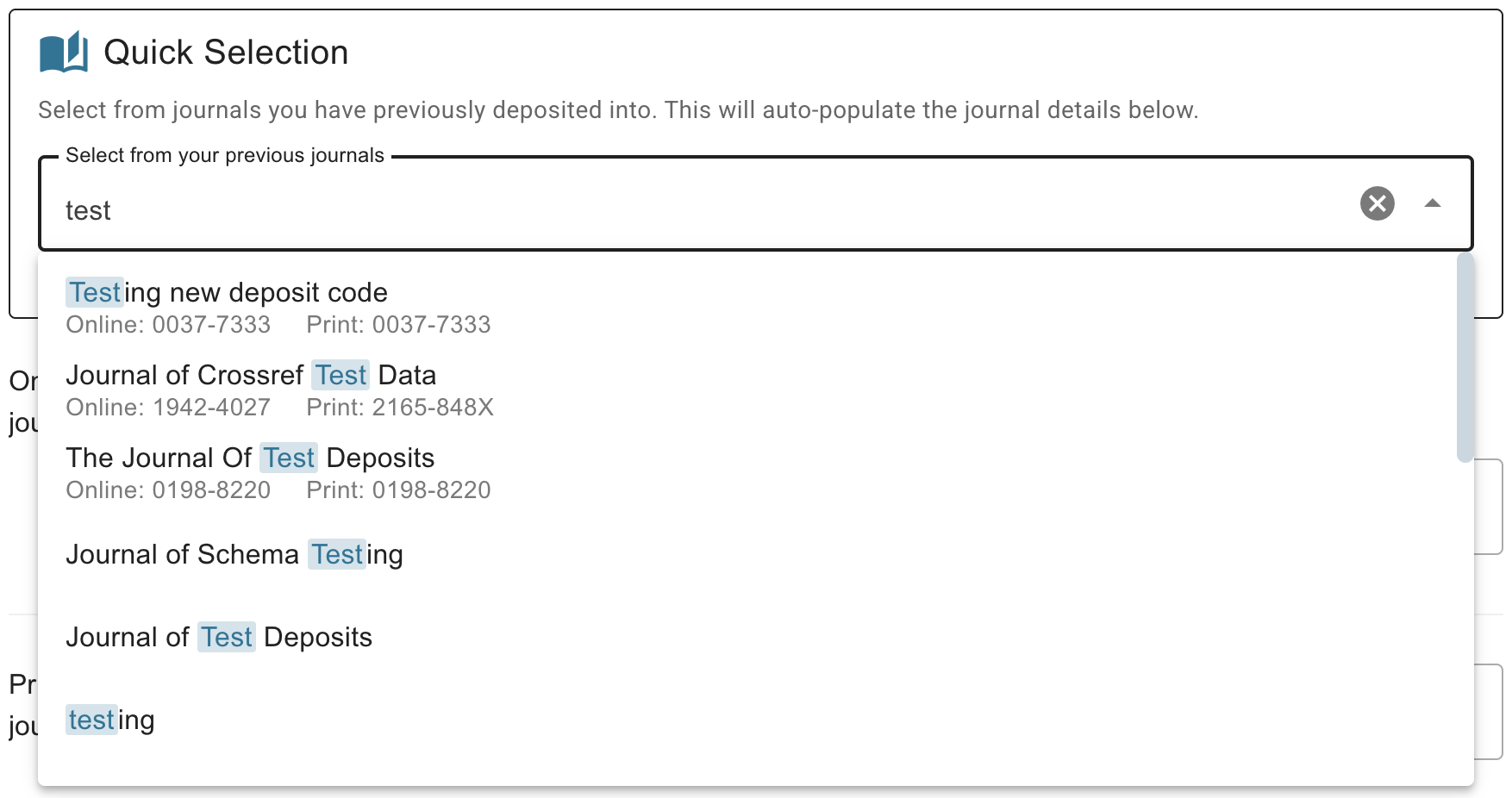
Journal article metadata also includes some information on the journal and, optionally, the issue and/or volume that the article was published in. To help avoid common errors with journal titles, you can auto-fill the journal metadata by choosing from a list of titles you have previously deposited into. You can search the list by title or by ISSN. Note that an ISSN is currently required to use the new Metadata Manager for registering journal articles.
Submit your record
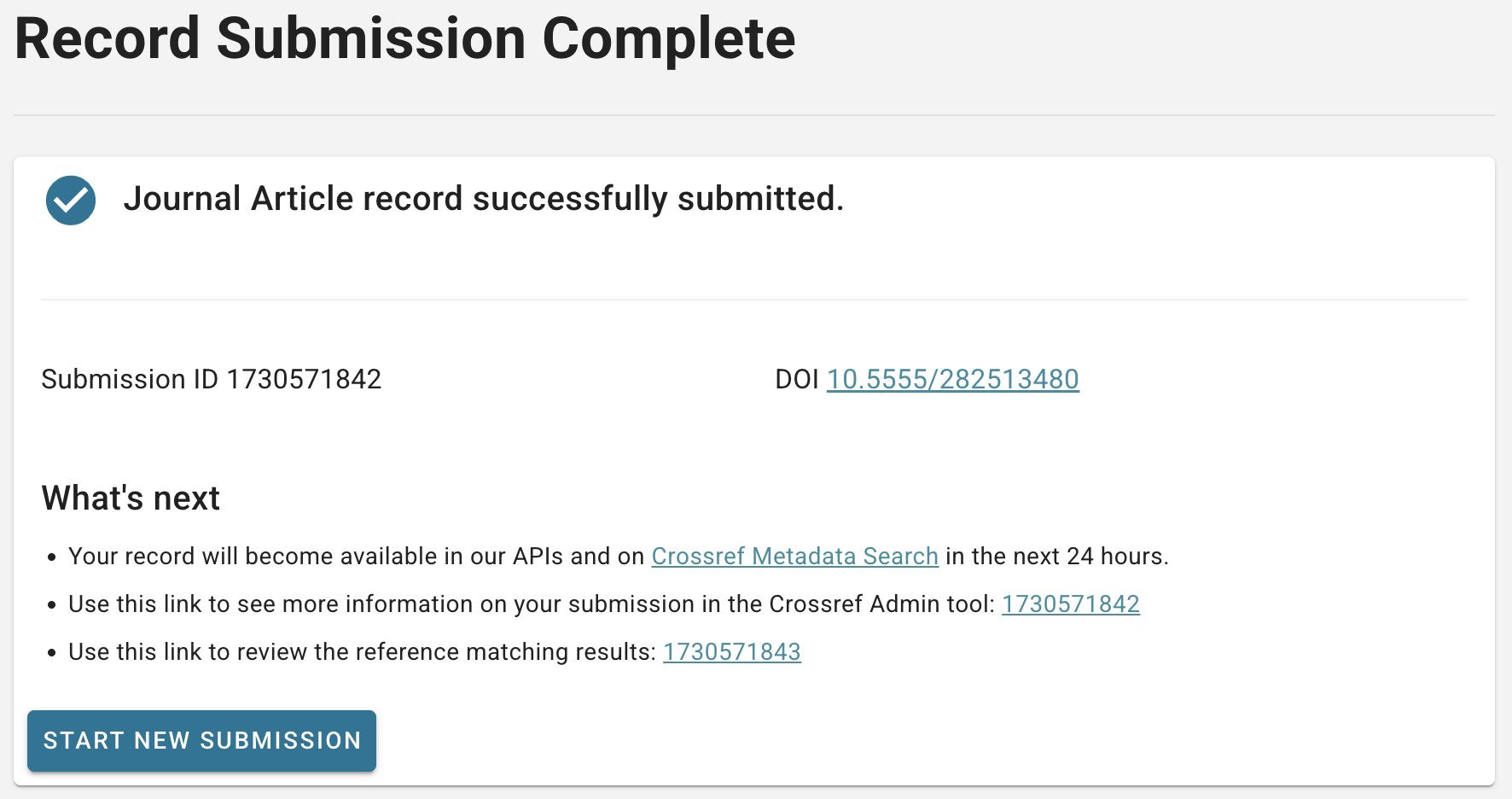
After filling out the required fields as well as any optional metadata you want to deposit, check that everything looks correct and then click Submit at the bottom of the form. The submission will be made immediately and a success message will appear on the screen.
From the success page, you can click through to more information about your submission in our Admin tool, or start another submission right away. If you have registered a journal article, you can choose to repeat the process for another article in the same journal and/or journal issue, which will pre-fill the form with the appropriate metadata so you don’t have to re-enter it.
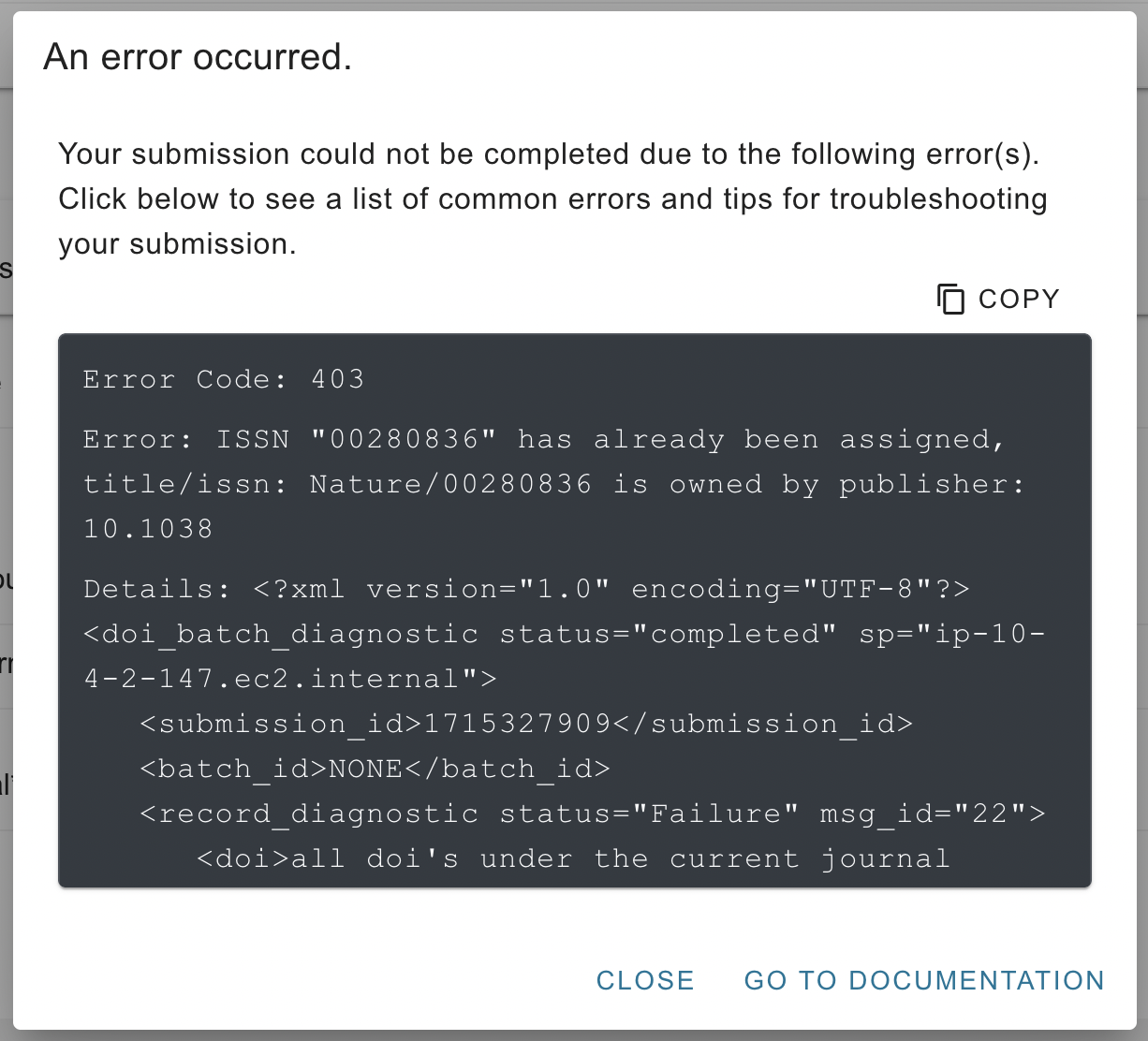
If there is a problem with your submission, you will see an error message appear instead of the success page. Go to the documentation for tips on how to troubleshoot common errors from our deposit system.
Edit an existing record
Metadata can change over time, and the new Metadata Manager tool allows you to update your records to reflect this.
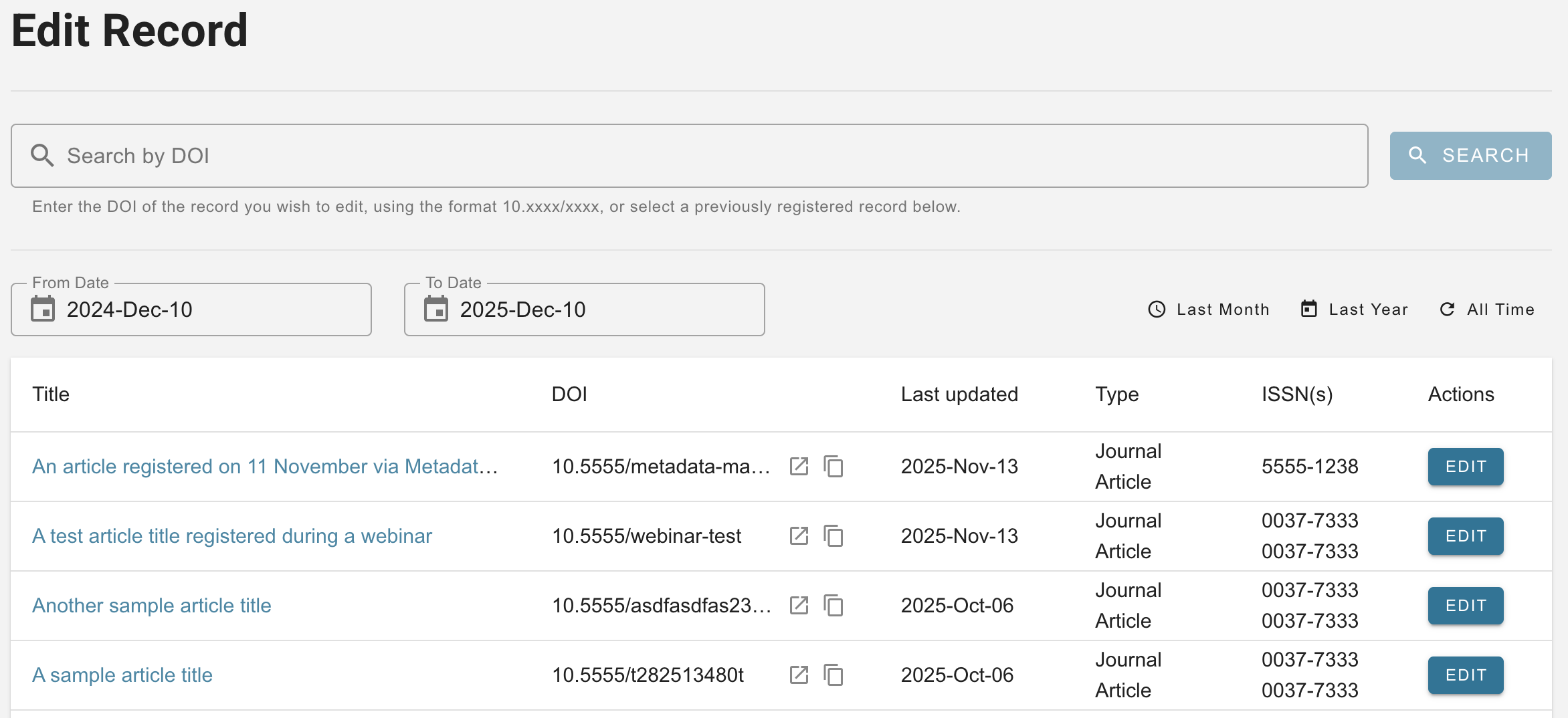
Choose Edit Record from the landing page or the sidebar navigation to see a list of the journal article and grant records you have previously registered using this tool, the web deposit form, or the deprecated legacy Metadata Manager.
You can search for any DOI, scroll through the list of previously registered records, or filter it by the date when the record was last updated. Find the record you are looking for and click Edit to access a form page with the record’s current metadata filled in. Simply make any changes and submit the record again to register the updated metadata.
Page maintainer: Lena Stoll Last updated: 2026-January-23