Each organization in the global community of Crossref members (that’s currently over 24k organizations in 166 different countries) plays a key role in building the Research Nexus. Any opportunity we have to meet with our members in person is a highlight and a way for us to learn more from each other. The month of January saw three of us travel to Bangkok to attend the first-ever Charleston Conference organised in Asia and to meet with our growing community in Thailand.
This year, we placed a spotlight on the Latin American community, hosting the second Crossref Metadata Sprint in São Paulo, Brazil from 4 - 6 March 2026. In our first tri-lingual event, we brought together 31 participants from Argentina, Brazil, Colombia, Ecuador, and Mexico. Our goal was to foster community co-creation using the open scholarly metadata. The Sprint was an opportunity to pose questions, share ideas, collaborate on research, and propose innovative solutions that enhance the use of metadata in scholarly communication and beyond.
Read on for more details about the content of the Sprint, and the resulting projects. You can also register to join our Sprint Showcase call on 22nd April to hear directly from the team about their creations.
On 17 March 2026, we experienced an outage that affected DOI resolution for Crossref DOIs and the deposit of metadata records by Crossref members. In this summary, we outline what happened, the impact on our community, and the steps we are taking to strengthen our systems and processes as a result.
We’re excited to announce a new data citation API endpoint and are seeking your feedback. The new service makes existing data citation relationships in our metadata available, thereby surfacing this part of the research nexus. At the same time, we’ve decided that it’s time to move on from Event Data.
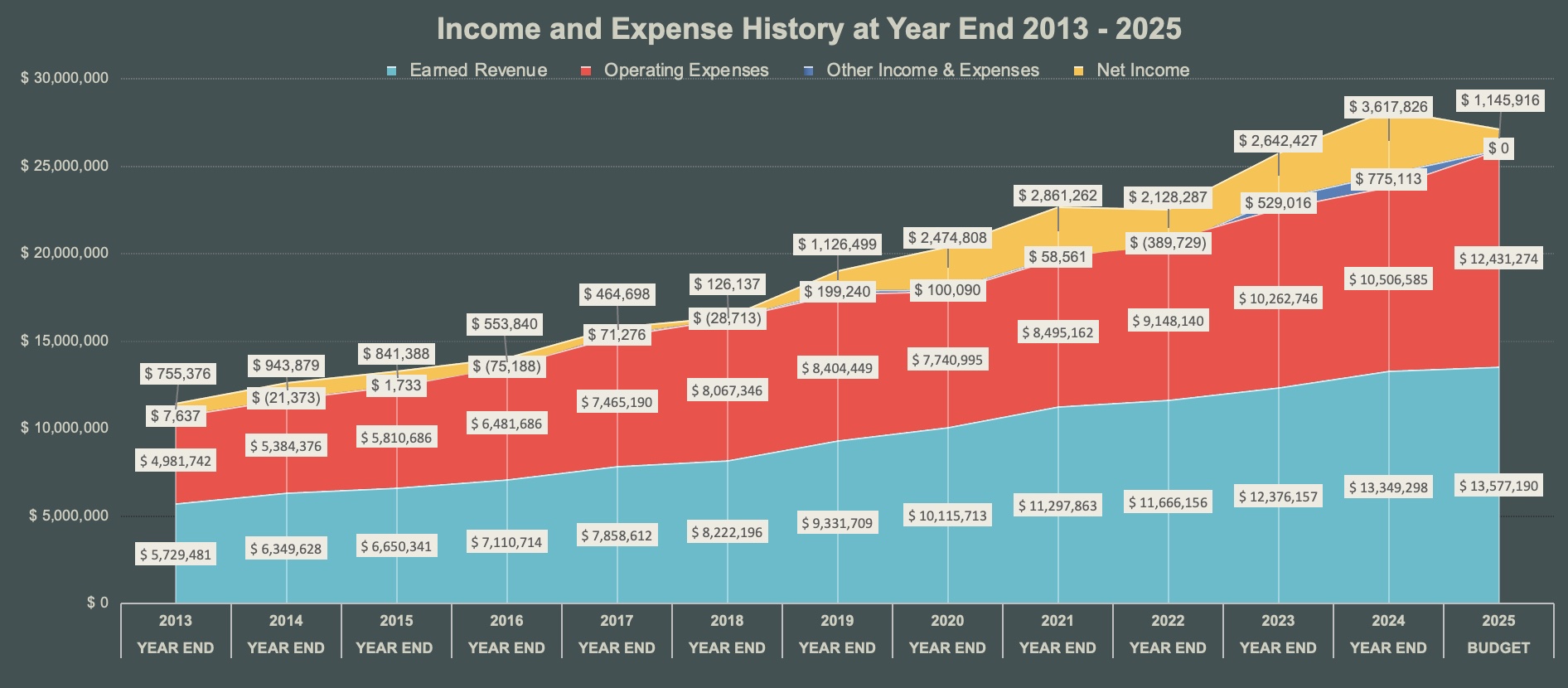
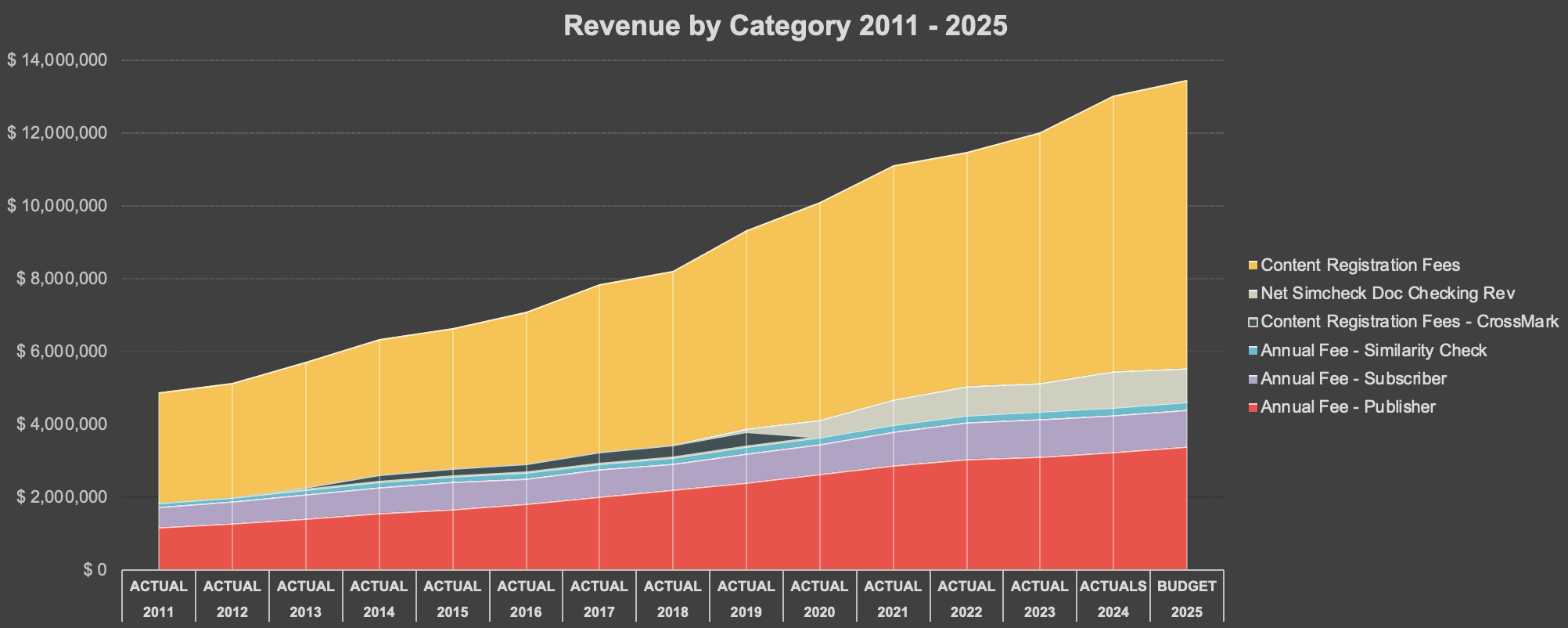
We operate on a budget of around $14 million (USD). About one-third of our revenue comes from annual dues (e.g., membership fees, subscriptions) and two-thirds from services (e.g., Content Registration, Similarly Check document checking). Our fees are set and reviewed by the Membership & Fees committee, which includes our staff, board, and community members. This group also created a set of fee principles which were approved by the board in 2019.
About 70% of our expenses are related to people - staff, benefits, and contracted support. 30% of our costs are everything else - hosting costs, licensing fees, events, and costs to do business like banking fees and insurance.
Each year we strive to generate a small operating net and have been able to do so nearly every year.
We also maintain a reserve fund to support long-term sustainability. We periodically report on our progress towards fulfilling the Principles of Open Scholarly Infrastructure: 2020, 2022, 2024
Below is a look at how our operations have changed over time.
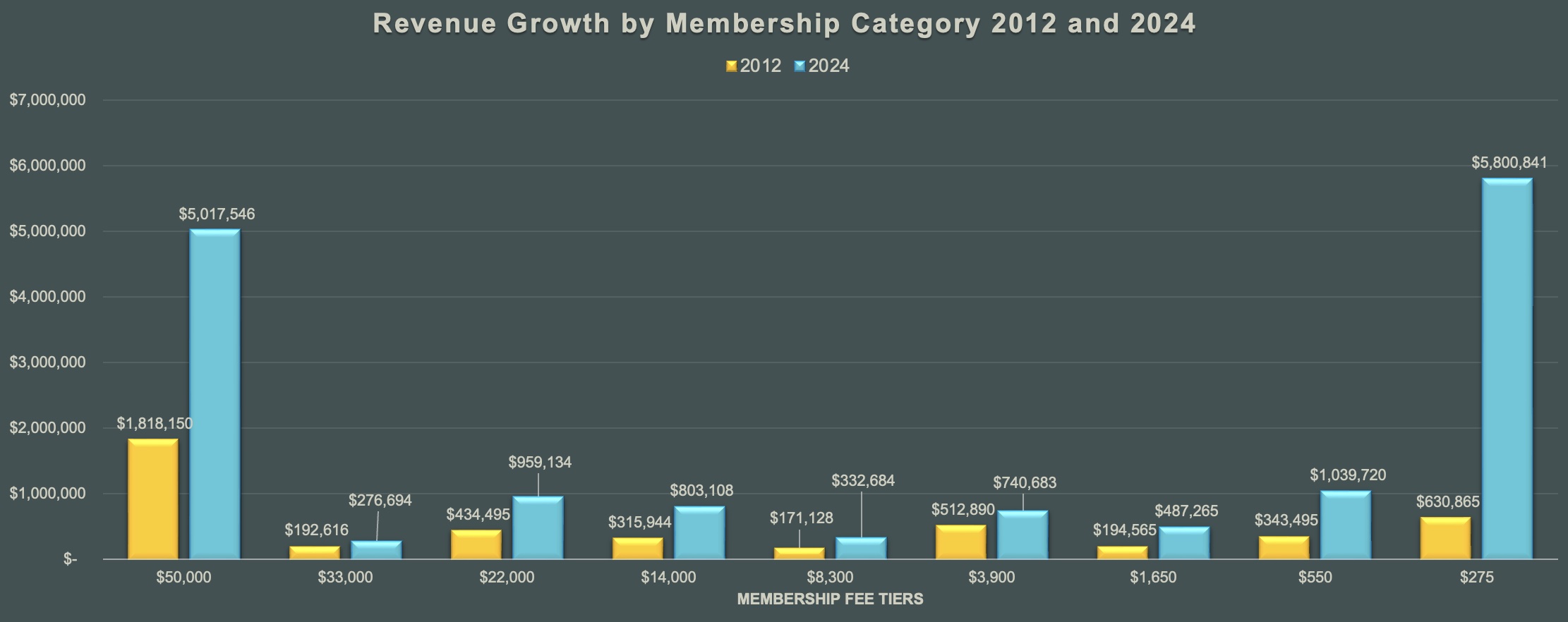
The majority of our revenue comes from members in smallest and largest tiers. We have seen the most growth in revenue from the smallest fee tier.F
Annual financial reporting
As a not-for-profit, we are tax-exempt, and to maintain that status, we undergo a financial audit each year by an independent accounting firm. Our auditors prepare our Form 990, which the US IRS requires and is made publicly available. It gives an overview of what we do, how we are governed, and detailed financial information.
Below are our recent Form 990s and audited financial statements.