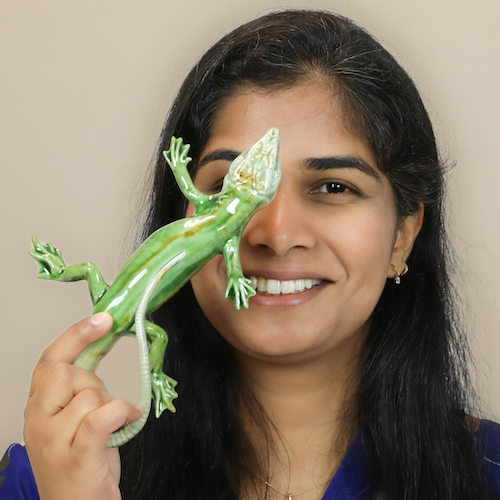
Ginny Hendricks

Ginny Hendricks

Chief Program Officer

Biography

Ginny Hendricks is Chief Program Officer at Crossref, leading community, membership, and program/product functions, working with the board and the research community to ensure responsible and sustainable oversight of the Crossref ecosystem. Before Crossref, she ran ‘Ardent’ for a decade, consulting within scholarly communications on awareness and growth strategies, product launches, and building global communities. She instigated Metadata 20/20, co-founded Scholarly Social and FORCE11’s Upstream, and has contributed to several open infrastructure initiatives, including ROR as well as POSI. She serves as Treasurer of the DOI Foundation, represents the international community on the Board of African Journals Online (AJOL), and works to encourage more effective open metadata practices as part of the Steering Committee of the Barcelona Declaration on Open Research Information. Ginny is a stickler for good manners, a lover of words, and when she’s not gardening, is still looking for a good shabu-shabu spot in London.

Topics

  • Open scholarly infrastructure
  • Integrity of the scholarly record
  • Non-profit leadership
  • Global community engagement
  • Program/product development

ORCID iD

0000-0002-0353-2702

Ginny Hendricks's Latest Blog Posts

On metadata enrichment

Metadata is communication; it can tell a story about research and paint a picture for others to respond to and learn from, across the world and throughout the forthcoming generations. Metadata can feel technical with words like ‘infrastructure’ and ‘schema’, and sometimes, like tech in general, it comes with hyperbole. But metadata really is part art (storytelling and pictures) and part science (structured models and standards) with both aspects being equally important, and requiring people as well as systems. That necessary combination of human and machine involvement also makes metadata challenging.

Reduction of Grant DOI registration fees: a boost for the Research Nexus

We are pleased to announce that—effective 1st January 2026—we have made two changes to grant record registration fees that aim to accelerate adoption of Crossref’s Grant Linking System (GLS) and provide a two-year window of opportunity to increase the number and availability of open persistent grant identifiers and boost the matching of relationships with research objects.

Highlights of a very busy year: our 2025 annual report

As we finish celebrating our 25th anniversary, we can look back on a truly transformational year, defined by the successful delivery of several long-planned, foundational projects—as well as updates to our teams, services, and fees—that position Crossref for success over the next quarter century as essential open scholarly infrastructure. In our update at the end of 2024, we highlighted that we had restructured our leadership team and paused some projects. The changes made in 2024 positioned us for a year of getting things done in 2025. We launched cross-functional programs, modernised our systems, strengthened connections with our growing global community, and streamlined a bunch of technical and business operations while continuing to grow our staff, members, content, relationships, and community connections.

Some things are big because they are small – the new fee tier for Crossref members takes effect

Kornelia Korzec, Thursday, Dec 11, 2025

In CommunityMembership

Leave a comment

Haz clic aquí para ver la versión en español

In January 2026, our new annual membership fee tier takes effect. The new tier is US$200 for member organisations that operate on publishing revenue or expenses (whichever is higher) of up to US$1,000 annually. We announced the Board’s decision, making it possible in July, and––as you can infer from Amanda’s latest blog––this is the first such change to the annual membership fee tiers in close to 20 years!

New tool to report on completeness of open research information globally

Wednesday 22nd October 2025—Crossref, the open scholarly infrastructure nonprofit, today releases an enhanced dashboard showing metadata coverage and individual organisations’ contributions to documenting the process and outputs of scientific research in the open. The tool helps research-performing, funding, and publishing organisations identify gaps in open research information, and provides supporting evidence for movements like the Barcelona Declaration for Open Research Information, which encourages more substantial commitment to stewarding and enriching the scholarly record through open metadata.

Read all of Ginny Hendricks's posts »